A membership society whose goal is to advance and to diffuse knowledge of organic evolution and other broad biological principles so as to enhance the conceptual unification of the biological sciences.
What Is an Elevational Range? A New Study Advises on How to Measure Where Species Live
Elevational ranges are a focus of intense study, particularly as climate change drives species upslope. But what, exactly, are they, and how do we measure them? In his new Synthesis, Linck addresses these questions and more with community science data
Drawing a polygon around where a species lives sounds simple, until you realize that that polygon shifts with the seasons, changes by slope and aspect, and drifts over years as climate conditions change. For decades, ecologists have studied how mountain-dwelling species move in response to climate change. However, a new study argues that we’ve been measuring those movements in ways that leave us with an incomplete understanding. In "What is an Elevational Range?", Dr. Ethan Linck of Montana State University synthesizes the elevational range limit literature and challenges the conventional approach of measuring species ranges based solely on presence/absence data.
As the planet warms, species are often expected to track their preferred temperatures by shifting upslope or poleward. However, real-world findings have found significant variation in shift directionality and speed. For instance, some species move upslope while others don’t move at all, with some even shifting downslope. Linck suggests that part of the variation stems from how we define elevational ranges in the first place.
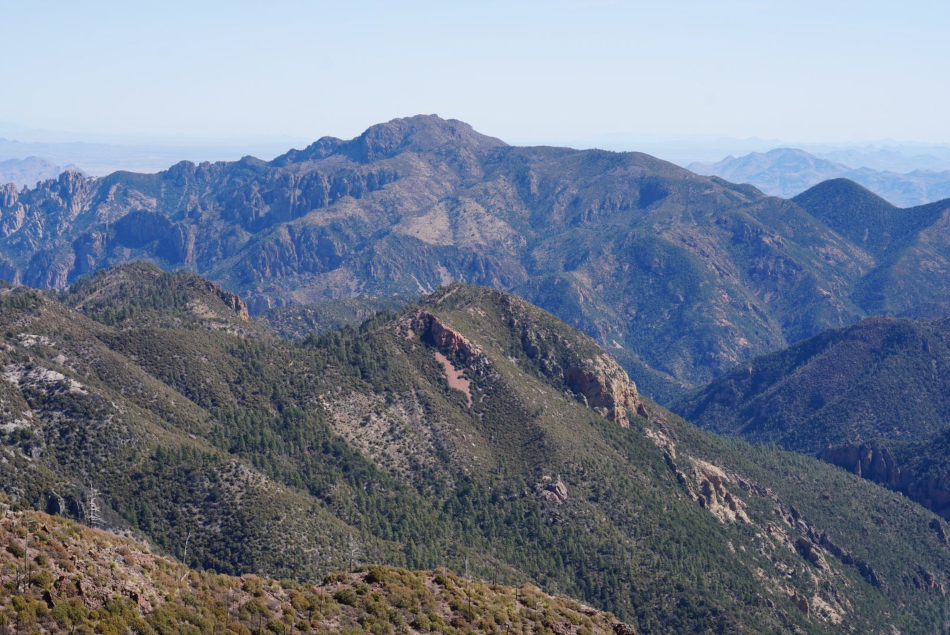
Drawing on large-scale community science data from eBird, a worldwide community science database for documenting birds, Linck highlights that species’ elevational distributions are far more variable than static maps might suggest. For example, the Yellow-eyed Junco, a mountain bird of the American Southwest, doesn’t stay at a fixed band of elevation. Its range shifts year to year, differs by aspect and mountain range, and populations vary in abundance across elevations. These findings suggest that a single number, such as the lowest or highest observed elevation of a species, fails to capture the full picture and that abundance metrics provide greater advantages when trying to understand species’ range dynamics.
As Linck explains, “Overly simple descriptions of elevational ranges also limit understanding. For example, variation across space is often ignored. The situation is similar for temporal variation in elevational ranges, where few studies have attempted to describe interannual fluctuations in detail.”
Importantly, Linck introduces a conceptual framework for thinking about elevational ranges. Instead of viewing them as simple endpoints (e.g., the lowest and highest locations where a species has been documented), he urges researchers to treat ranges as multi-dimensional patterns shaped by factors like abundance, habitat, and even individual traits. He also emphasizes the need to match research scale to the research question: small-scale patterns may be governed by daily movements, while large-scale range patterns are the result of evolutionary history and dispersal.
The study’s practical takeaways are clear: scientists should measure not just where organisms are, but also how many are present at various elevations. They should replicate surveys over time, account for imperfect detection, and ultimately, embrace the complexity rather than obscure it. By refining how we measure range shifts, Linck’s work lays a foundation for more accurate predictions of biodiversity responses to climate change. As warming continues to push species to the brink, better tools for tracking their shifts will prove critical for conservation efforts.
Peter Billman is a Ph.D. candidate in Ecology and Evolutionary Biology at the University of Connecticut in Dr. Mark Urban’s lab. His research investigates the ecological and evolutionary mechanisms shaping species’ range limits, with a particular focus on how biotic interactions and climatic tolerances constrain distributions under climate change. He also examines how disturbance events such as wildfires shape evolutionary dynamics, focusing on patterns of genetic structuring and the maintenance of genetic diversity in amphibian populations across mountain ecosystems. By integrating ecological theory with empirical data, his work seeks to advance our understanding of the mechanisms that govern species persistence in rapidly changing environments.