The ASN has chosen two new officers. We congratulate the winners, whose election statements are presented below, as well as the distinguished runners-up, Maria Orive and Lee Hsiang Liow.
Results of the 2026 Election
Posted on
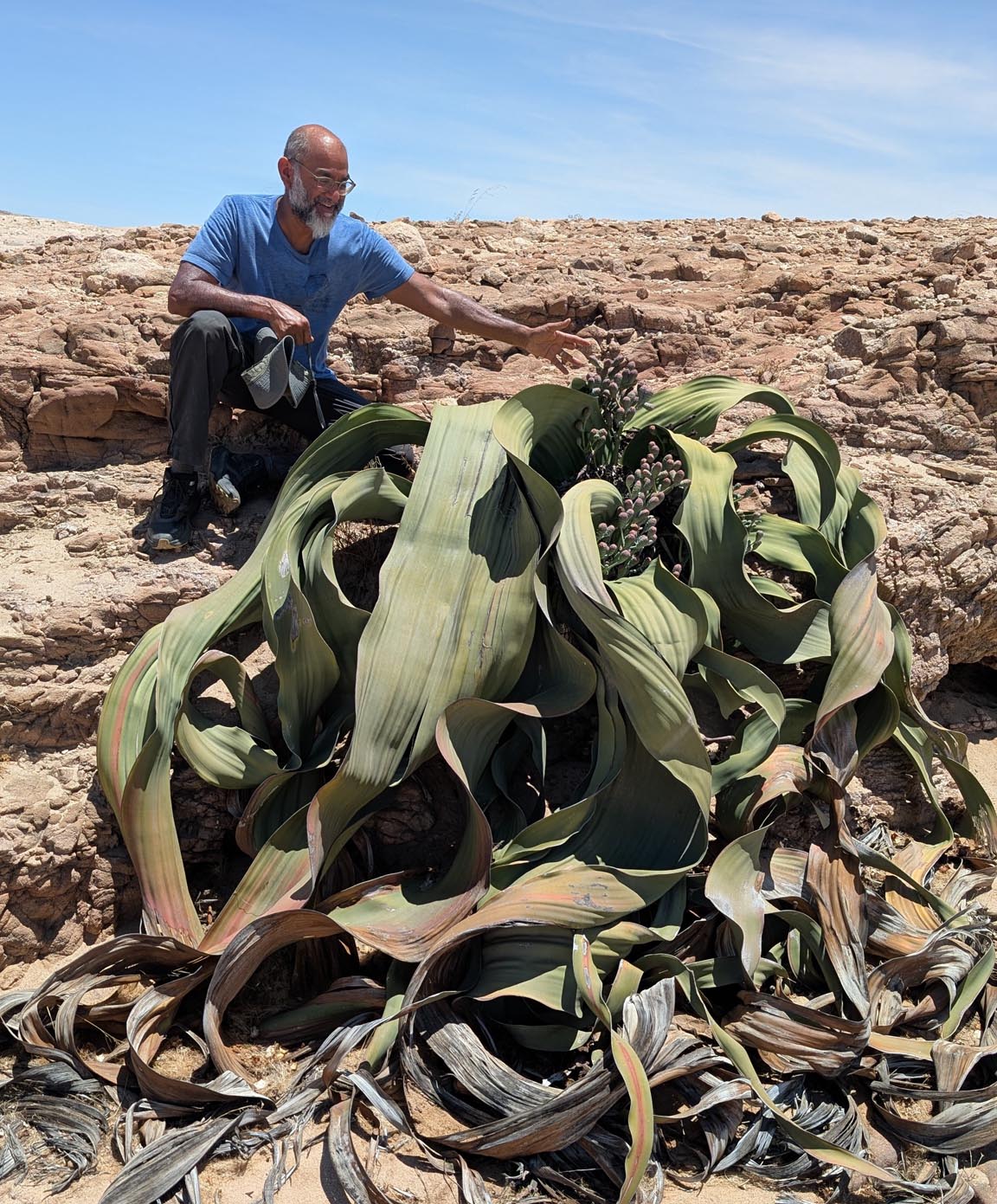
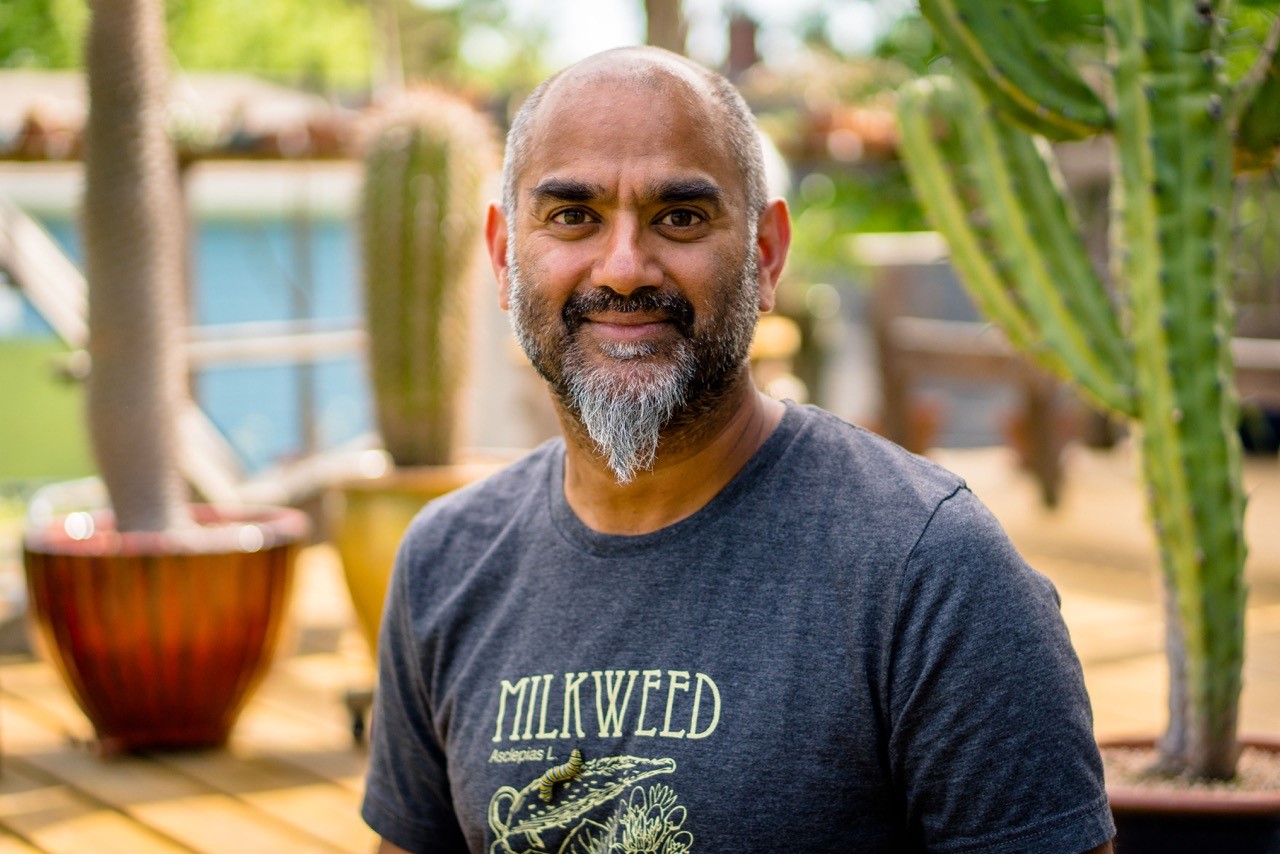
Anurag Agrawal, President 2028 (serving 2027–2031)
Election Statement:
Thank you for this opportunity to serve one of my most beloved communities. I am an evolutionary ecologist and naturalist, broadly interested in questions and approaches that help us understand our natural and social world. My primary research has focused on plant–herbivore coevolution, using tools from comparative biology, experimental manipulations, genetics, and natural history.
I was an undergraduate Biology major and then a master’s student in Conservation Biology at the University of Pennsylvania, and I went on to UC Davis for my PhD in Population Biology (1999). With the support of mentors, peers, and students, I have been fortunate to be recognized by several societies in the ecological and evolutionary sciences and in the broader arenas of scholarship, including recent election to the American Academy of Arts & Sciences and the National Academy of Sciences.
Most of my service and leadership has been within Cornell—mentoring junior faculty, serving on university committees at multiple levels, and helping to direct our interdisciplinary sustainability center during its founding. Outside of Cornell, I have served as Vice President of ASN and on several committees of ASN and Ecological Society of America.
As a graduate student, I aspired to publish in The American Naturalist, and only after four rejections did I finally make it! The journal and society have long felt closest to my core interests, and several standalone meetings remain among my most enjoyable conferences and scientific interactions. This is the society for which I would feel most comfortable in a leadership role because of the alignment of interests, values, and the people.
To the extent that I can, I would like to help steer the Society in the direction its membership wants to go, while of course keeping in mind the Society’s enduring mission: conceptual unification across biology, using whatever tools are needed. I strive to be fair, to listen carefully and consider diverse perspectives, and to be decisive when decisions are needed. At my core, I want to promote intellectual curiosity, staying true to the pursuit of understanding nature, and expanding access to that pursuit. I finally have the space in my life, personally and professionally, to give back to ASN, and I am grateful for the opportunity.
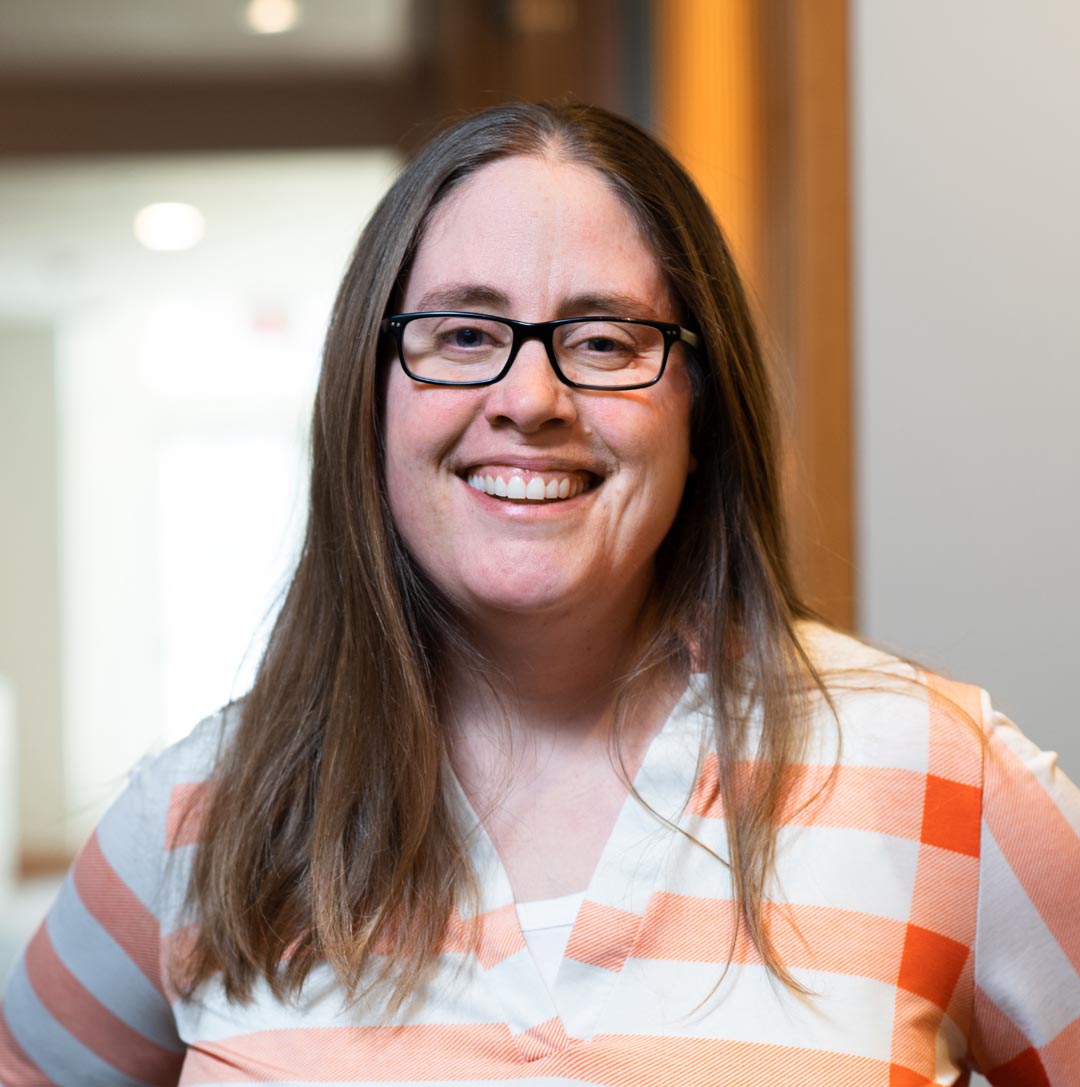
Megan Frederickson, Vice President 2028 (serving 2027–2029)
Election Statement:
I am delighted to put my name forward for the position of Vice President of the American Society of Naturalists. I study mutualism and symbiosis in both host-microbe and plant-animal systems. I have long been fascinated by how the reciprocal benefits exchanged in mutualisms give rise to positive feedback between partners, entangling their ecological and evolutionary fates. Briefly, my research seeks to understand how mutualism and symbiosis evolve and how these interactions affect other ecological and evolutionary processes including community assembly, biological invasions, range dynamics, adaptation, and coevolution. I do this work in plants, insects, and microbes—when it comes to study organisms, the only hard rule in my lab is ‘no bones.’
I received my bachelor’s degree from Harvard University in 2001 and my Ph.D. from Stanford University in 2006, before returning to Harvard as a Junior Fellow at the Harvard Society of Fellows from 2006 to 2009. I am Canadian, but between getting my degrees in the US, attending high school in Hong Kong, and my many years of field research in the Peruvian Amazon, I have lived nearly half of my life abroad, which has given me a deep sympathy for international students and scholars, and migrants more generally. In 2009, I was lucky to get a faculty position back in Canada and I am now a Professor of Ecology and Evolutionary Biology at the University of Toronto. I still have a real fondness for California and Massachusetts, though, and I did a sabbatical at UC Davis in 2015–2016 and was a Radcliffe Fellow at the Radcliffe Institute for Advanced Study at Harvard in 2020.
I also have strong ties to academic societies across the US–Canada border, especially the Canadian Society for Ecology and Evolution (CSEE) and ASN, of course. From 2022 to 2025, I was the Treasurer of CSEE, and I handled the CSEE budget, financial statements, expense reimbursements, insurance, and so on. I have been an Associate Editor at The American Naturalist since 2015 and previously served on the ASN Nominating Committee. Over the years, I have attended most of the ASN stand-alone meetings at Asilomar, where I have judged grad student and postdoc talks, served as a student mentor, and failed spectacularly at trivia night. Beyond academic society work, I have also been on many provincial and federal grant panels in Canada; I am currently on the multidisciplinary review panel for the New Frontiers in Research Fund and I previously co-chaired the Evolution and Ecology evaluation group for the NSERC Discovery Grant program.
I am excited to be considered for the position of ASN Vice President because the ASN community has long been my intellectual ‘home.’ If elected, I would organize a VP symposium on integrating positive interactions into evolutionary medicine—a research area that tends to emphasize antagonisms, especially infectious disease. I would invite speakers working at the interface between ecology and evolutionary biology, microbiome science, and biomedicine. I would also explore ways (e.g., hybrid options) to ensure the full participation of our diverse scientific community at the symposium regardless of citizenship or other constraints on travel to conferences.